


Introduction
United Airlines Flight UA82, operating the busy long-haul route from Newark Liberty International Airport (EWR) to Indira Gandhi International Airport (DEL), experienced a serious in-flight emergency shortly after departure. The incident prompted an immediate return to Newark, underscoring the importance of robust aviation safety protocols, trained crews, and decisive leadership in the cockpit.
This comprehensive article provides a detailed, structured breakdown of what occurred during the UA82 emergency, the specific technical malfunction, how the crew responded, how passengers were affected, and what the event means for global aviation safety today.
Understanding United Airlines Flight UA82
The Route and Aircraft
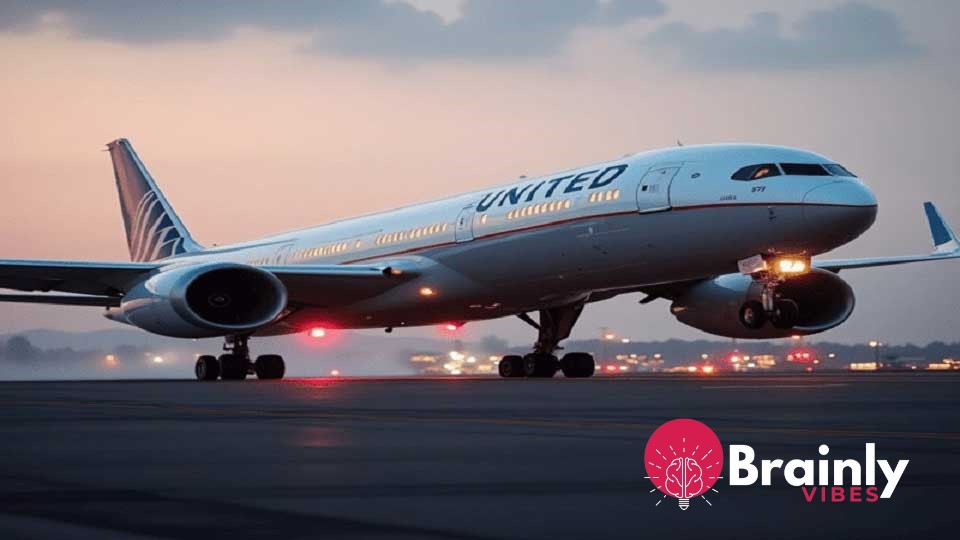
United Airlines Flight UA82 is a daily long-distance route connecting the United States and India. The flight is typically operated by a Boeing 787-9 Dreamliner, known for its advanced avionics, long-range performance, and fuel-efficient design. As a premium trans-Atlantic service, it carries hundreds of passengers, crew members, and significant cargo volume across continents.
What Happened During the UA82 Emergency
The Technical Malfunction
Shortly after takeoff, United Airlines Flight UA82 emergency experienced a malfunction in the aircraft’s electronics cooling system. This system plays a critical role in maintaining safe operating temperatures for the aircraft’s avionics—computers, communication equipment, navigation systems, and electronic flight-control components.
A failure in this system can cause:
- Overheating of sensitive electronics
- Degraded autopilot performance
- Potential navigation errors
- Loss of communication equipment reliability
In long-haul flights crossing the North Atlantic, such problems elevate safety risks, particularly because diversion airports become limited once the aircraft reaches oceanic airspace.
Crew Response and Emergency Declaration
Immediate Action
Upon receiving system alerts, the flight crew followed standard emergency procedures:
- Assessed all warnings and system readouts
- Confirmed malfunction in electronics cooling
- Declared an emergency using squawk code 7700
- Coordinated with Air Traffic Control for priority handling
- Executed a controlled U-turn back toward Newark
This rapid, decisive action reflects the high training standards for United Airlines pilots and the emphasis on passenger safety.
Emergency Landing
The aircraft returned safely to Newark Liberty International Airport. Crews prepared for the approach, ensured cabin readiness, and executed a smooth touchdown with emergency services on standby.
All passengers and crew members disembarked safely, and the aircraft was grounded for inspection and maintenance.
Impact on Passengers
Passengers on board experienced:
- Unexpected return shortly after departure
- Clear communication from the crew
- Hotel accommodations for overnight delays
- Rebooking on future flights
- Meal and travel vouchers
- Customer support for onward connections
While the incident caused delays, the airline prioritized safety and delivered timely assistance to minimize disruptions.
Possible Causes of Electronics Cooling System Failure
Although the precise cause remains under investigation, common reasons for such failures include:
1. Mechanical Component Failure
Fans, ducts, or valves within the cooling system may malfunction or stop operating.
2. Electrical Faults
Wiring issues, circuit failures, or poor electrical connections can disrupt cooling mechanisms.
3. Sensor Errors
Faulty temperature sensors may trigger false alarms or fail to detect real overheating risks.
4. Blocked Airflow
Restricted airflow due to maintenance issues or external conditions can lead to overheating.
5. Software Errors
Modern aircraft rely heavily on software that monitors and manages cooling components. A glitch can trigger a system shutdown or error message.
Regardless of the cause, the crew’s quick response prevented escalation.
Why Returning to Newark Was the Right Decision
The flight crew’s choice to return immediately was not only standard protocol—it was the safest option.
Key Reasons Their Decision Was Correct
- The aircraft was still near a major international airport with full emergency support.
- Continuing toward the Atlantic with a cooling failure increases risk exponentially.
- Avionics overheating has the potential to cause widespread system degradation.
- Safety must outweigh schedule, revenue, or passenger inconvenience.
The entire chain of events reflects the strength of aviation-safety design and crew professionalism.
How the UA82 Incident Reflects Modern Aviation Safety
1. Advanced Monitoring Systems Work
Modern airliners are designed to detect the earliest signs of technical issues. UA82’s alerts allowed early intervention.
2. Crew Training Is Exceptional
Pilots undergo rigorous, continuous training for emergency response, leading to excellent decision-making under pressure.
3. Safety Protocols Are Effective
From emergency declaration to return landing, every step followed global aviation standards.
4. Passenger Support Matters
United Airlines provided accommodations, rebooking, and customer care to minimize disruption.
The UA82 emergency showcases how aviation remains the safest form of travel due to multi-layered protection systems.
Conclusion
The United Airlines Flight UA82 emergency highlights the importance of safety-first decision-making in modern aviation. When a critical malfunction occurred in the electronics cooling system, the flight crew responded rapidly and appropriately—declaring an emergency, returning to Newark, and ensuring all passengers and crew remained safe.
While disruptions occurred, the incident ultimately reflects the strength of today’s aviation infrastructure: advanced monitoring technology, professional pilots, clear emergency protocols, and a commitment to passenger well-being.
Aviation remains extraordinarily safe, and incidents like UA82 prove that even when unexpected technical problems arise, the industry’s systems and people are fully prepared to handle them.
FAQs
1. What caused the UA82 emergency?
A malfunction in the aircraft’s electronics cooling system triggered alarms and required an immediate return to Newark.
2. Was anyone injured during the incident?
No. All passengers and crew disembarked safely.
3. Why did the pilots choose to return instead of continuing the journey?
Long-haul flights require fully functioning avionics. A cooling failure poses risks of overheating critical systems, making an immediate return the safest option.
4. What happened to the aircraft after landing?
It was removed from service for detailed inspection and maintenance.
5. How did United Airlines handle passenger delays?
Travelers were given hotel stays, meals, rebooking options, and additional support.
6. Does this incident mean the Boeing 787-9 is unsafe?
No. All aircraft can experience technical issues. The 787-9 remains one of the safest and most advanced jets in service.
7. Are such in-flight emergencies common?
They are rare, and when they occur, aviation protocols ensure swift and safe outcomes—just as they did with UA82.
